
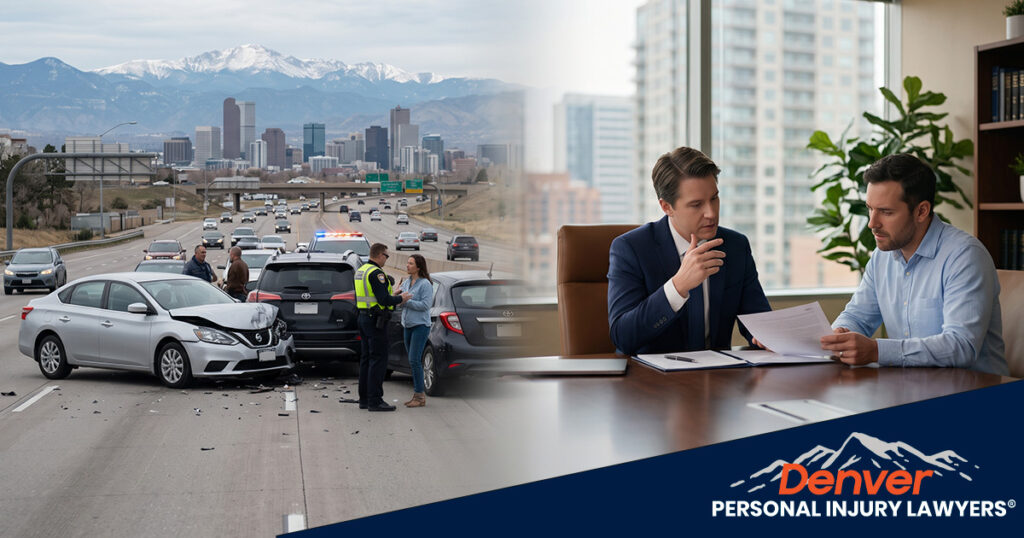
A single crash in Denver can involve mistakes by several drivers. One may follow too closely while another speeds or changes lanes without checking, leaving multiple drivers at fault for the same accident.
This often happens in multi-vehicle crashes on I-25, I-70, Highway 36, and other busy Denver roads, where one mistake can trigger a chain reaction and make liability harder to determine.
Because fault directly affects compensation, insurance companies may try to shift blame to reduce what they pay. A Denver car accident attorney can investigate the crash, preserve key evidence, and challenge unfair fault allegations before they reduce the value of your claim.
Table of Contents
ToggleYes, Multiple Drivers Can Be At Fault For The Same Accident
Yes, multiple drivers at fault can share blame in the same crash. In plain terms, more than one person can cause the collision. Also, more than one person can worsen it.
In most cases, fault gets split by percentage based on various factors such as timing and distance. For example, one driver may be 70 percent at fault while another may be 30 percent at fault. Sometimes the split involves three or more drivers. Therefore, multiple drivers at fault often leads to complex negotiations.
However, insurers often push quick fault splits to speed up settlement talks and reduce what they pay. Determining fault in a car accident is crucial as it affects your compensation significantly. Because of that, a Denver car accident lawyer can help protect your share of recovery and push back when an insurer tries to inflate your percentage.
How Colorado Comparative Negligence Works With Shared Fault
Colorado follows a modified comparative negligence rule under Colorado Revised Statutes § 13-21-111. You can still recover damages if you share some fault, but your compensation is reduced by your percentage of responsibility.
For example, if your damages total $100,000 and you are found 30 percent at fault, your recovery could be reduced to $70,000. The 50 percent cutoff is critical. If you are 50 percent or more at fault, you can be barred from recovering damages. This becomes especially important when multiple drivers are at fault because insurers may dispute how responsibility should be divided.
When several drivers share responsibility, each defendant may be responsible for damages based on that driver’s percentage of fault. Therefore, even a small change in the fault percentage can significantly affect your recovery. A Denver car accident attorney can gather evidence, challenge inflated fault allegations, and protect your claim when insurers try to shift more blame onto you.
Common Denver Scenarios Where Multiple Drivers Are At Fault
Shared fault often depends on timing, speed, distance, and driver decisions. When multiple drivers are at fault, the evidence usually determines how responsibility is divided.
Common Denver scenarios include:
- Chain-reaction crashes and pileups: One driver may trigger the first impact, while others may share fault for tailgating, speeding, distraction, or failing to stop in time. Photos, skid marks, debris, dashcam footage, traffic cameras, and witness statements can help reconstruct the sequence.
- Intersection and left-turn crashes: A driver may fail to yield while another speeds through the intersection or enters on a changing light. Signal timing, lane markings, surveillance video, witness statements, and impact angles can help establish fault.
- Lane-change and merging accidents: These cases often involve disputes over signaling, blind spots, spacing, and right of way. Damage patterns, scrape marks, dashcam footage, phone records, and neutral witnesses may help show what happened.
- Weather-related crashes: Snow, ice, and rain can reduce traction, but drivers still must adjust their speed and following distance. Road photos, tire marks, video, and evidence of vehicle speed can help determine whether several drivers contributed.
- Pedestrian and cyclist crashes: Fault may depend on crosswalk rules, visibility, speed, lighting, signals, and how each person moved before the collision. Dashcams, surveillance footage, helmet cameras, sight-line evidence, and witness statements can be especially important.
In any of these situations, small details can significantly change how fault is divided and how much compensation an injured person may recover.
How Evidence Helps Determine Fault in Multi-Driver Accidents
Fault is built from proof, not opinions. Therefore, you should gather evidence early. Also, you should keep it organized. This matters because multiple drivers at fault claims create competing narratives.
Core sources include:
- Police reports, including diagrams and noted violations
- Witness statements, including passengers and bystanders
- Photos of damage, skid marks, debris, and lane markings
- Video from dashcams, traffic cameras, and nearby businesses
- Vehicle damage patterns, which show angles and force
Police reports can influence negotiations, but they are not always final. You still need supporting proof, and you should act quickly because vehicles may be repaired, scenes can change, and video may be deleted. When commercial vehicles are involved, additional records may also become important. Multiple insurers can further complicate and slow the process.
What Makes Truck Pileups More Complex
Denver truck crashes involve physics and paperwork. Stopping distance increases with weight. Load shift can change control. Brake condition matters too. Therefore, multiple drivers at fault disputes often intensify when trucks are involved.
Helpful records may include:
- Inspection history and maintenance records
- Driver logs and route data
- Electronic data, sometimes called black box data
- Bills of lading and load weight information
Because multiple insurers may be involved, negotiations often slow down. Also, each insurer may blame the others. So timelines and documentation matter even more.
How Insurance Companies Handle Multi-Driver Fault Claims
Adjusters aim to limit payouts and settle fast. So when multiple drivers are at fault, insurers may look for quick percentages that support lower offers.
Multi-car claims often involve:
- Multiple statements taken early
- Multiple adjusters working the file
- Competing versions of the same events
- Pressure to accept a shared-fault narrative
Because of that, you should stay careful and consistent. Do not guess or exaggerate. Describe only what you saw, heard, and did.
If the insurer gets the fault split wrong, you can challenge it. A Denver car accident lawyer can gather stronger evidence, build a clear timeline, deal directly with the insurers, and push back against fault percentages that unfairly reduce your claim.
Challenging Fault Percentages When Multiple Drivers Are At Fault
When an insurer assigns you too much blame, a Denver car accident attorney can challenge that assessment with evidence instead of argument alone. The goal is to show how the crash actually happened and where the insurer’s version breaks down.
An attorney can:
- Review recorded statements and claim records.
- Compare driver accounts for inconsistencies.
- Gather missing photos, video, and witness evidence.
- Correct errors involving lanes, signals, speed, or vehicle positions.
- Build a timeline that matches the physical evidence.
This can be especially important when multiple drivers are at fault and each insurer is trying to minimize its own responsibility. A Denver car accident attorney can help prevent an unfair fault percentage from reducing the value of your claim.
Colorado Deadlines That Can Jeopardize a Strong Accident Claim
Every Colorado car accident claim has deadlines. In most motor vehicle personal injury cases, you generally have three years from the date of the crash to file a lawsuit under Colorado Revised Statutes § 13-80-101.
Even when the three-year deadline applies, waiting can weaken your case long before it expires. Surveillance footage may be overwritten, witnesses can become harder to locate, memories fade, and damaged vehicles may be repaired or destroyed. As a result, a Denver car accident attorney can identify the deadlines that apply, preserve critical evidence, and act before insurers have more time to build a case for shifting fault onto you.
FAQs (Frequently Asked Questions)
Can multiple drivers be at fault in the same Denver car accident?
Yes, multiple drivers can share fault in the same crash. More than one person can cause or worsen a collision, and fault is often split by percentage based on factors like timing and distance. This shared fault situation is common in Denver, especially on highways like Interstate 25, I-70, and busy surface streets.
How does Colorado’s comparative negligence law affect compensation when multiple drivers are at fault?
Colorado uses a modified comparative negligence system where you can recover damages even if you share some fault. However, your compensation decreases by your percentage of fault. If your negligence is 50% or more, you may be barred from recovering any damages. This makes accurately determining fault percentages crucial in multi-driver accidents.
What common scenarios in Denver often involve multiple drivers at fault?
Multiple drivers at fault commonly appear in chain reaction rear-end crashes and pileups on highways near ramps and merges, intersection collisions involving left turns and signal confusion, as well as lane changes and merging on busy roads like I-25. These situations involve complex factors such as timing, speed, distance, and driver decisions.
What types of evidence help determine fault percentages in multi-driver accidents?
Key evidence includes photos showing vehicle positions and damage points, skid marks and debris patterns, dashcam footage, traffic camera recordings, witness statements about speed and following distance, signal timing data, impact angles from vehicle damage, and physical marks like scrape lines indicating vehicle positions during collisions.
How can a Denver car accident lawyer assist when multiple drivers are at fault?
A Denver car accident lawyer can help protect your share of recovery by carefully analyzing the evidence to challenge unfair fault percentages assigned by insurers. They negotiate complex settlements involving multiple parties to ensure you receive fair compensation based on accurate fault assessments under Colorado’s comparative negligence laws.
Do Not Let Shared Fault Reduce the Value of Your Denver Accident Claim
When several drivers may share responsibility for a crash, insurance companies can use that uncertainty to reduce what they pay. They may argue that you were speeding, following too closely, distracted, or otherwise partly responsible. Even a small increase in your assigned fault can significantly reduce your compensation or, in some cases, prevent recovery altogether.
If you or a loved one was hurt in a multi-vehicle crash, pileup, or other accident involving multiple drivers at fault, having strong legal representation can make a major difference. An experienced Denver car accident attorney can investigate how the crash happened, preserve critical evidence, challenge unfair fault allegations, and push back when insurers try to shift blame onto you.
Schedule a free consultation with us at Denver Personal Injury Lawyers® about your accident and the compensation you may be entitled to pursue.
